Specific comparisons
We explain the trade that changes when you choose one format, action, or tier over another.
Independent beginner piano guides
Clear decisions on key action, range, sound, space, brands, and budget—made for real homes and first lessons.

The Piano Start method
Marketing starts with model names. A better decision starts with four durable questions: how many keys, how the action feels, whether the sound invites practice, and where the instrument will live.
“The right first piano is not the one with the most features. It is the one you want to sit down at again tomorrow.”
The complete library
Read the flagship guide first, or jump directly to the comparison holding up your decision.
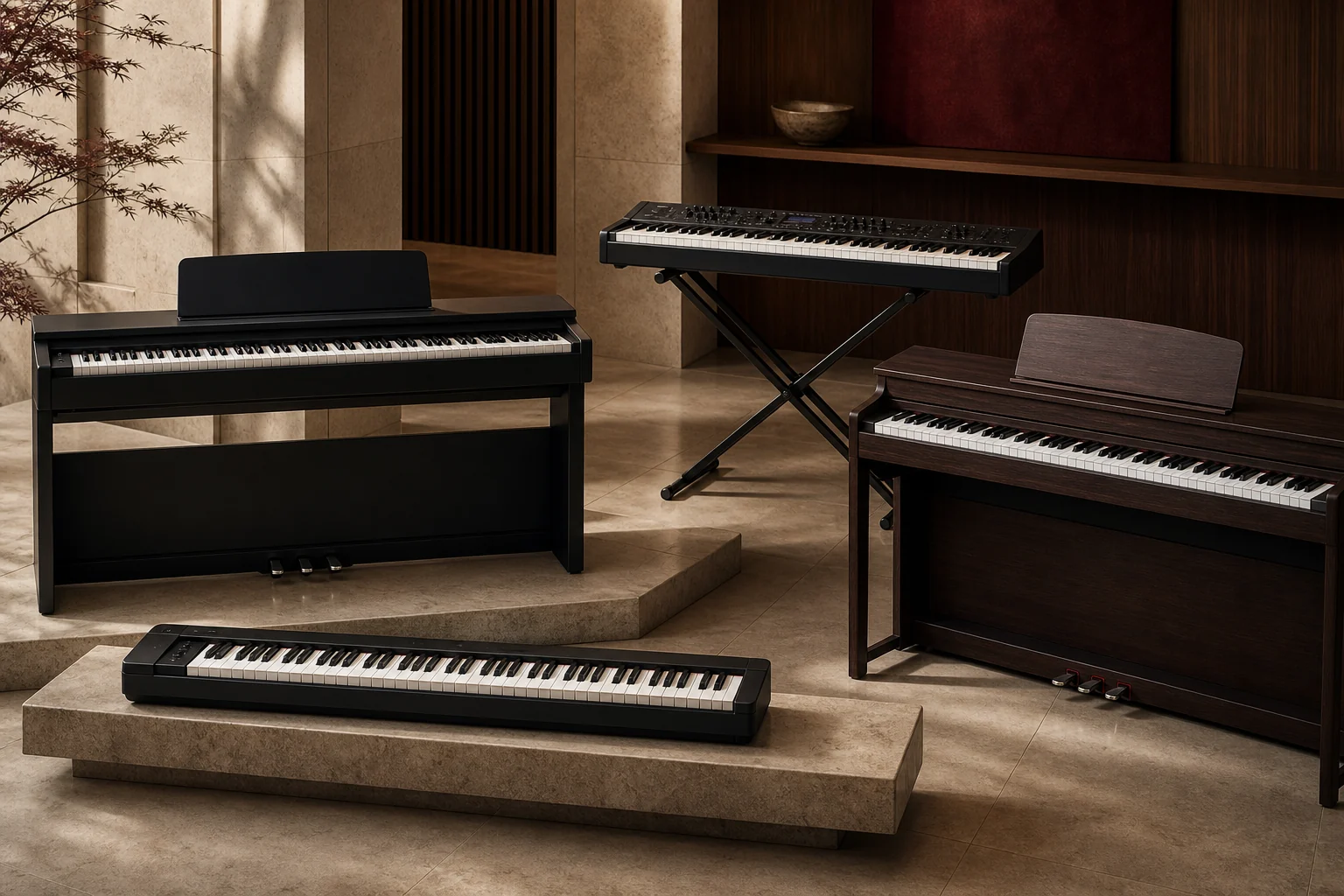 01 · Brand guideFour piano brands, four different strengthsCompare Yamaha, Casio, Roland, and Kawai by the quality that matters most to you.Explore guide →
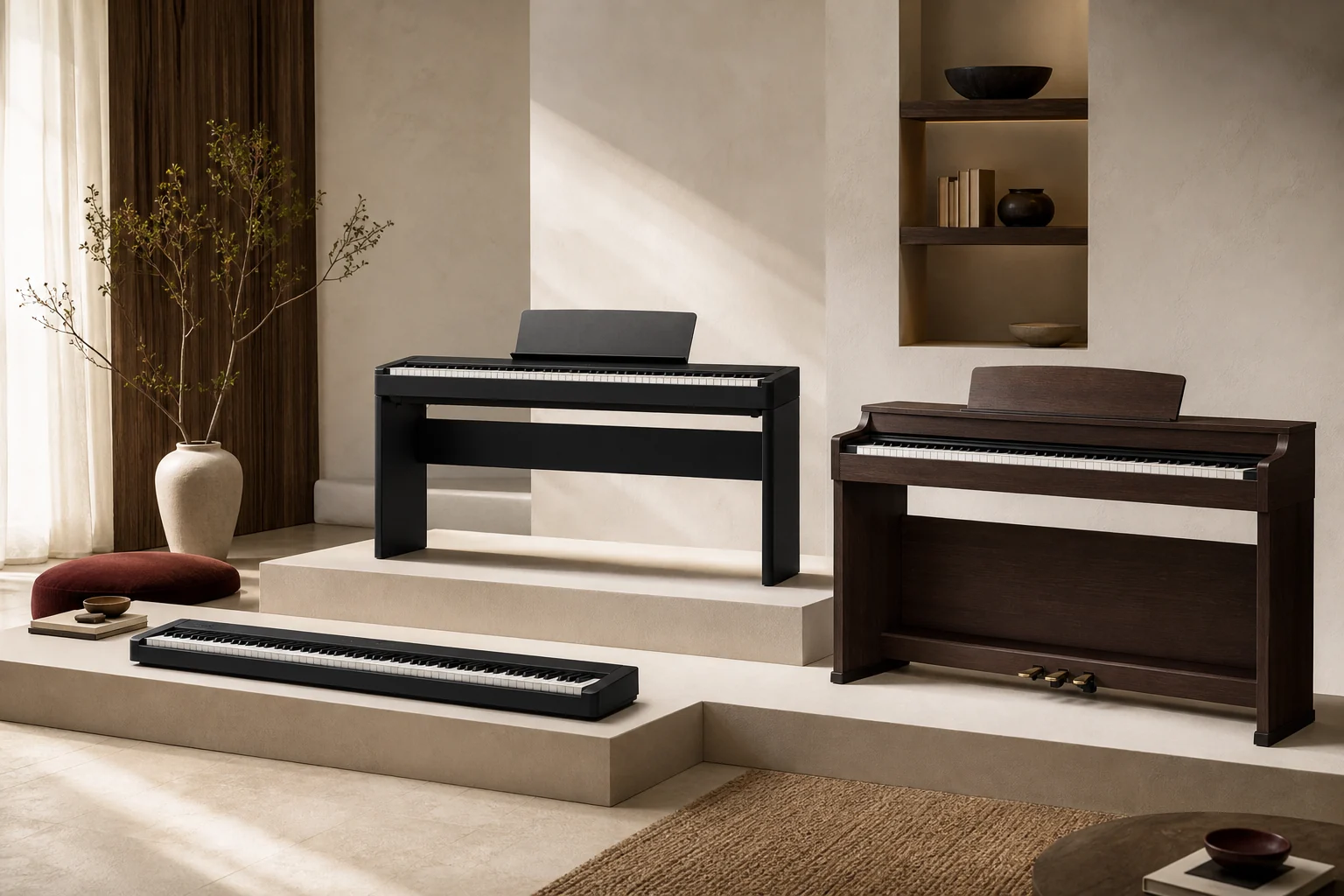 02 · Budget guideSpend on the parts that improve practiceUnderstand what raises the price—and what beginners can safely skip.Explore guide →
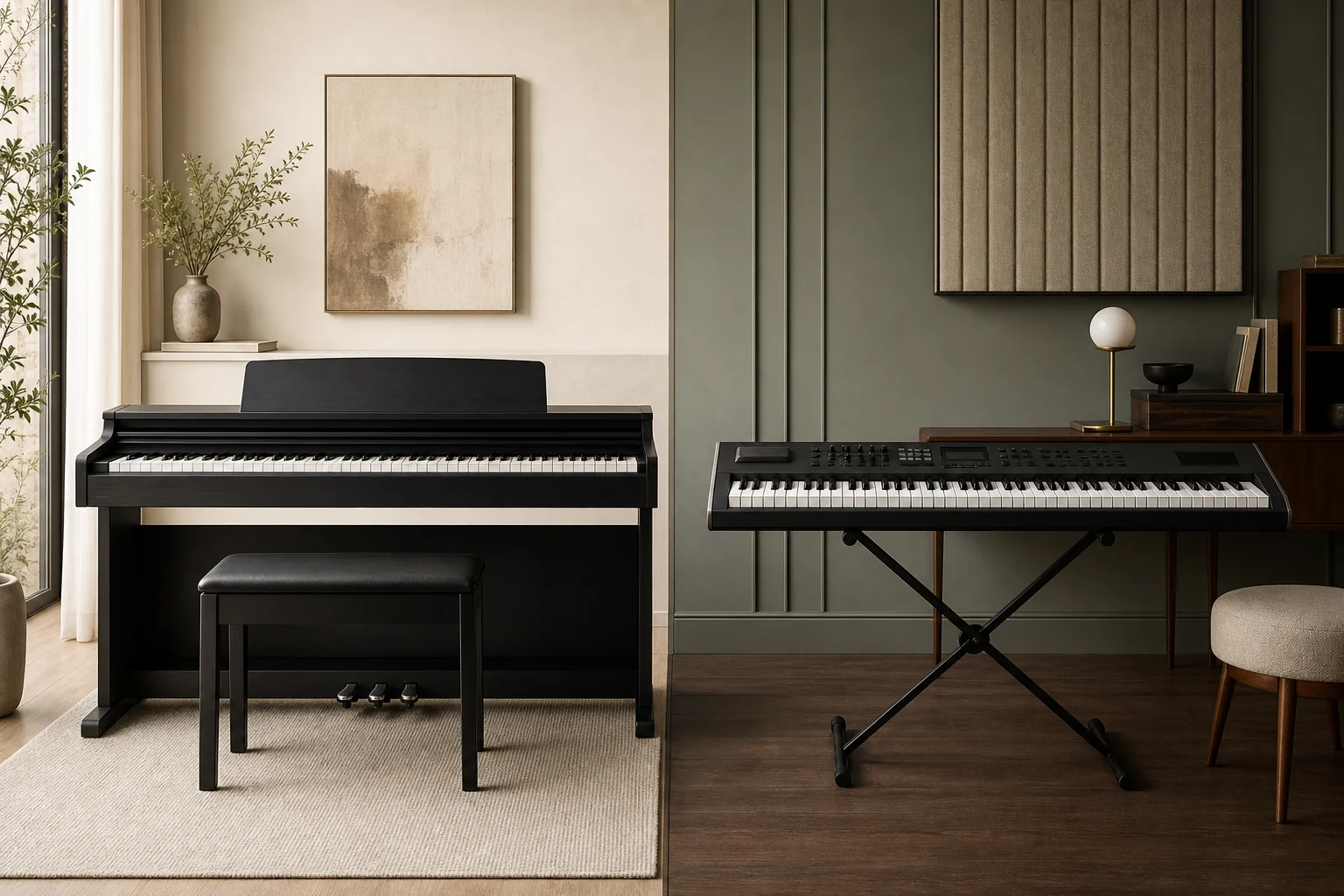 03 · Category comparisonPiano fidelity or musical flexibility?See how action, sound, pedals, features, and portability point to two different instruments.Explore guide →
 04 · Key-action guideThe key feel that builds real techniqueCompare resistance, control, and how well each action transfers to an acoustic piano.Explore guide →
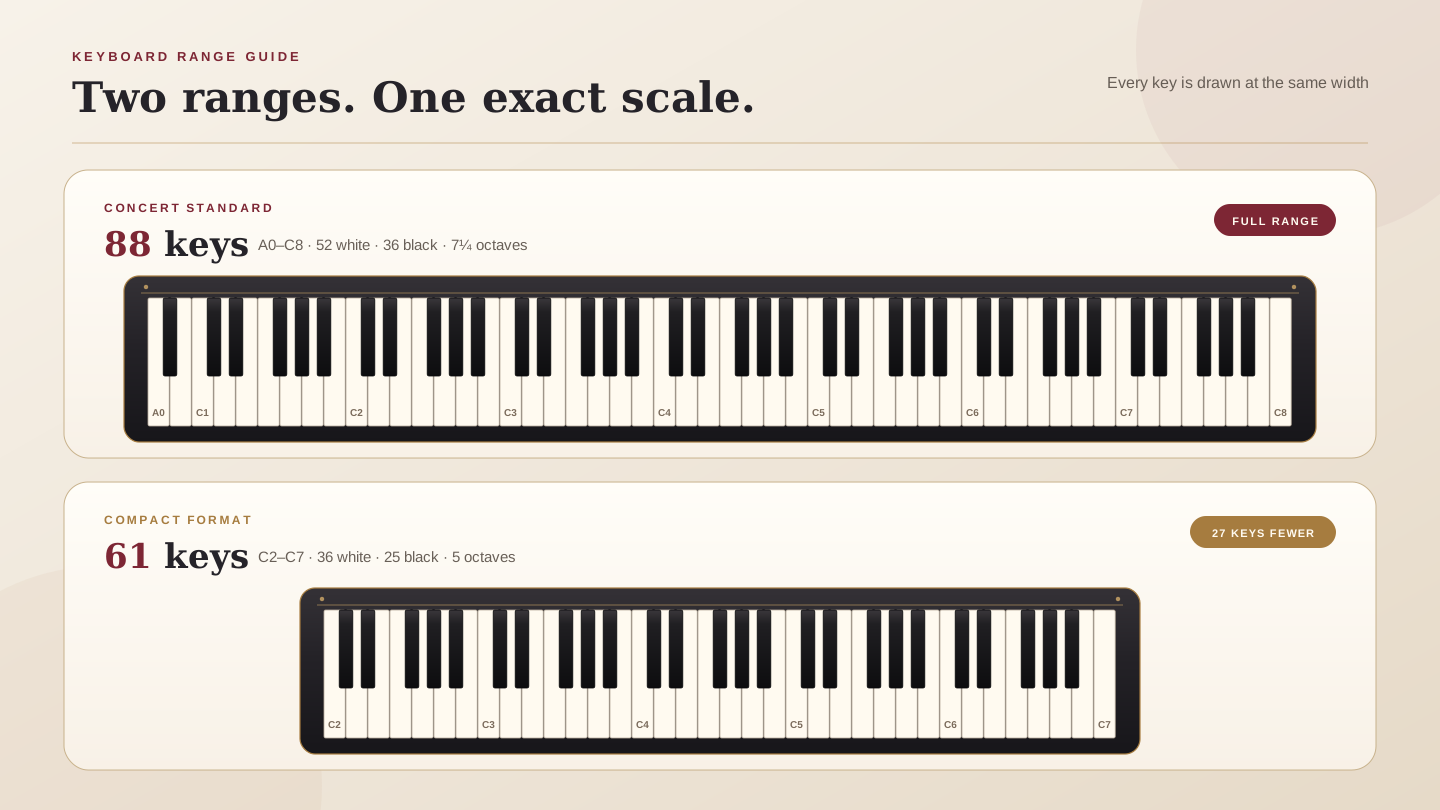 05 · Key-count guideFull range or a smaller footprint?Compare repertoire, action, room size, portability, and how soon an upgrade may matter.Explore guide →
06 · Flagship beginner guideThe complete first-piano buying guideMake four clear decisions—key count, action, sound, and form—then test the instrument with confidence.Explore guide →
05 · Key-count guideFull range or a smaller footprint?Compare repertoire, action, room size, portability, and how soon an upgrade may matter.Explore guide →
06 · Flagship beginner guideThe complete first-piano buying guideMake four clear decisions—key count, action, sound, and form—then test the instrument with confidence.Explore guide →
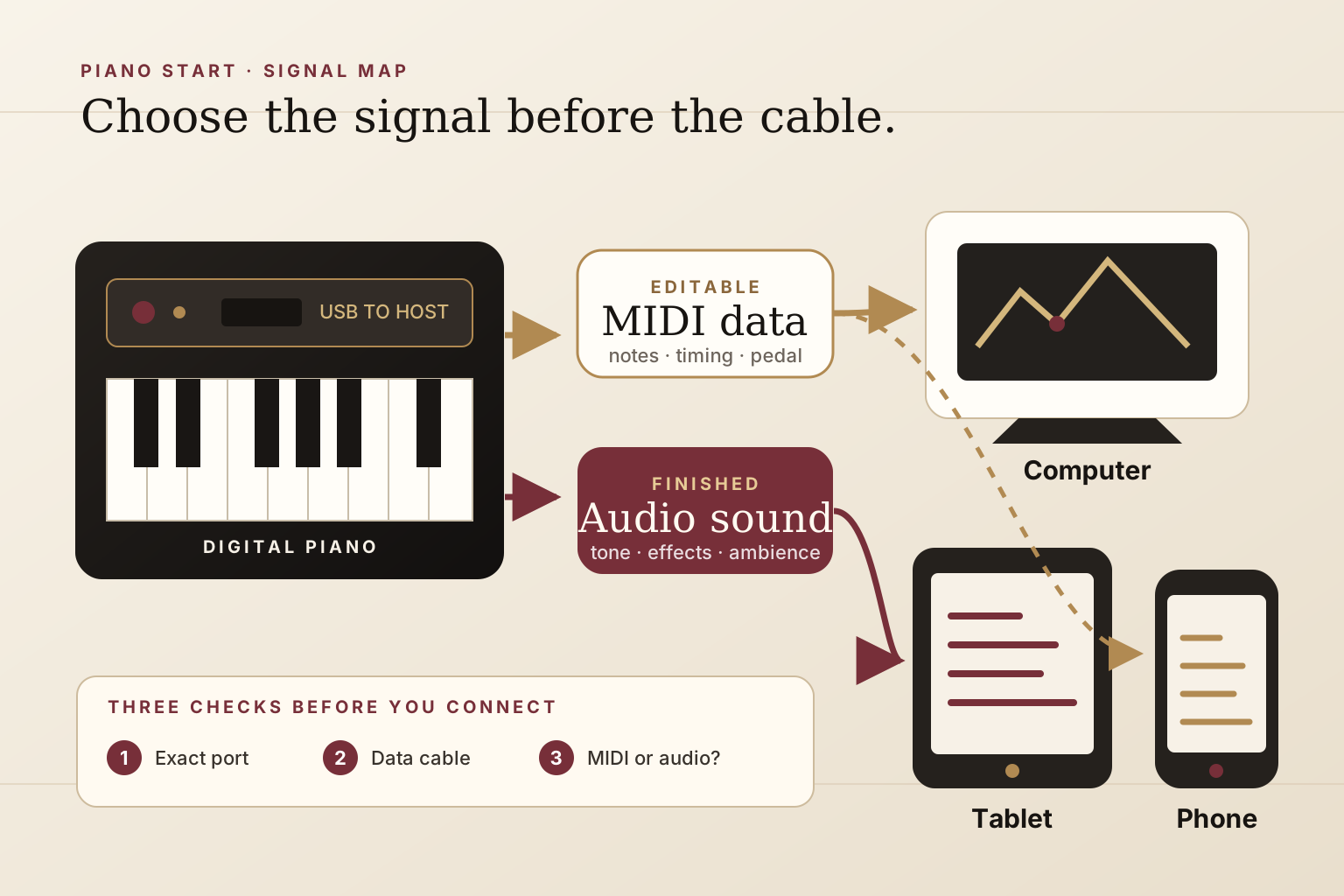 07 · Connection guideConnect your piano without buying the wrong cableChoose the right MIDI or audio path, identify every port, and fix the connection methodically.Explore guide →
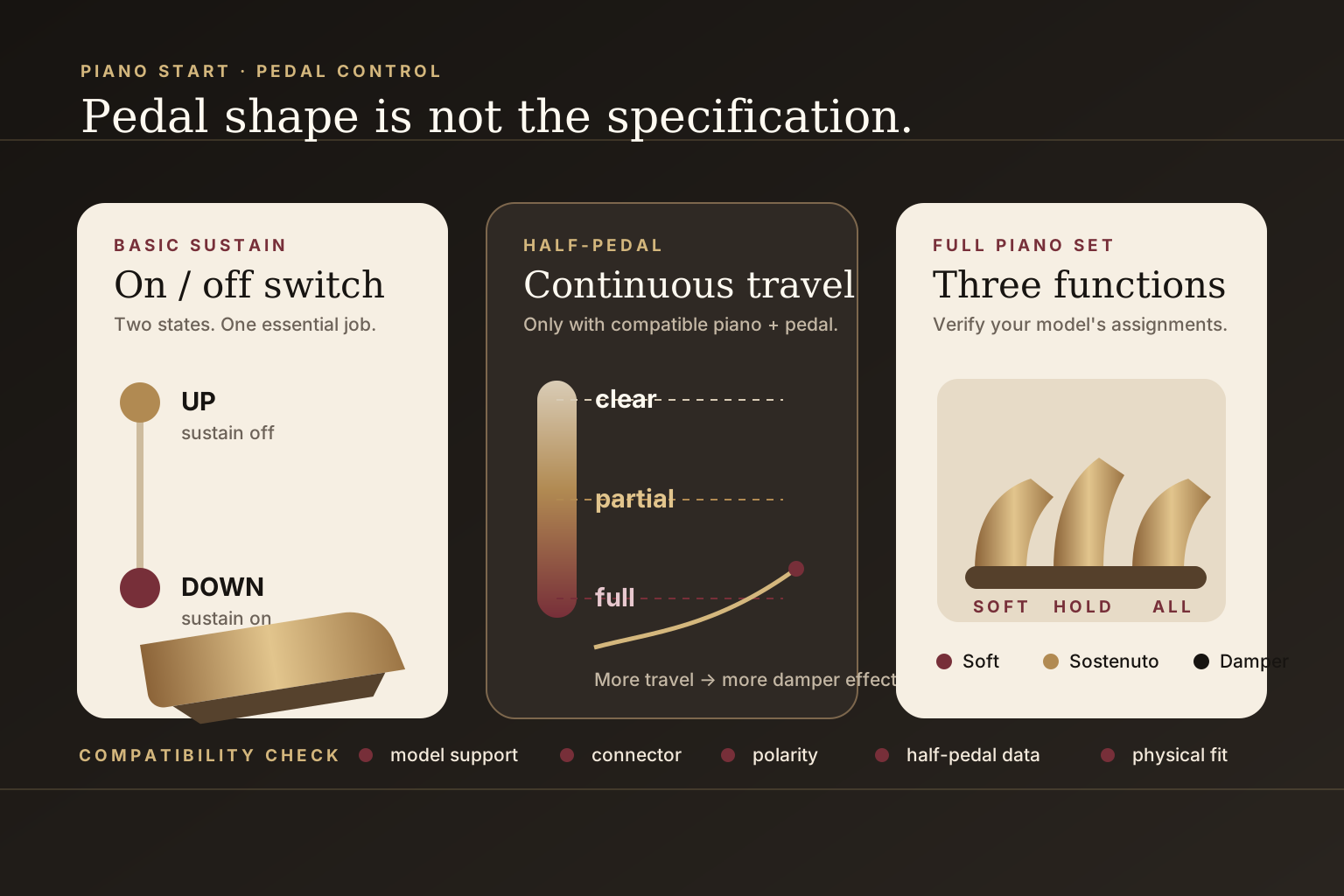 08 · Pedal guideChoose the right sustain or three-pedal setupUnderstand damper, sostenuto, soft, half-pedaling, compatibility, and the tests that prevent pedal problems.Explore guide →
A strong default
It shapes every note and builds transferable control.
Correct bench height, solid stand, and a pedal that stays put.
Most home practice happens below showroom volume.
Our editorial promise
We explain the trade that changes when you choose one format, action, or tier over another.
There is no universal best piano, brand, or budget. Your goal and constraints lead the recommendation.
Technical claims link to manufacturers where the extra verification helps you compare.