Start here
The four decisions that actually matter
Brands and model names change. These four questions remain useful across every price tier.
Key count
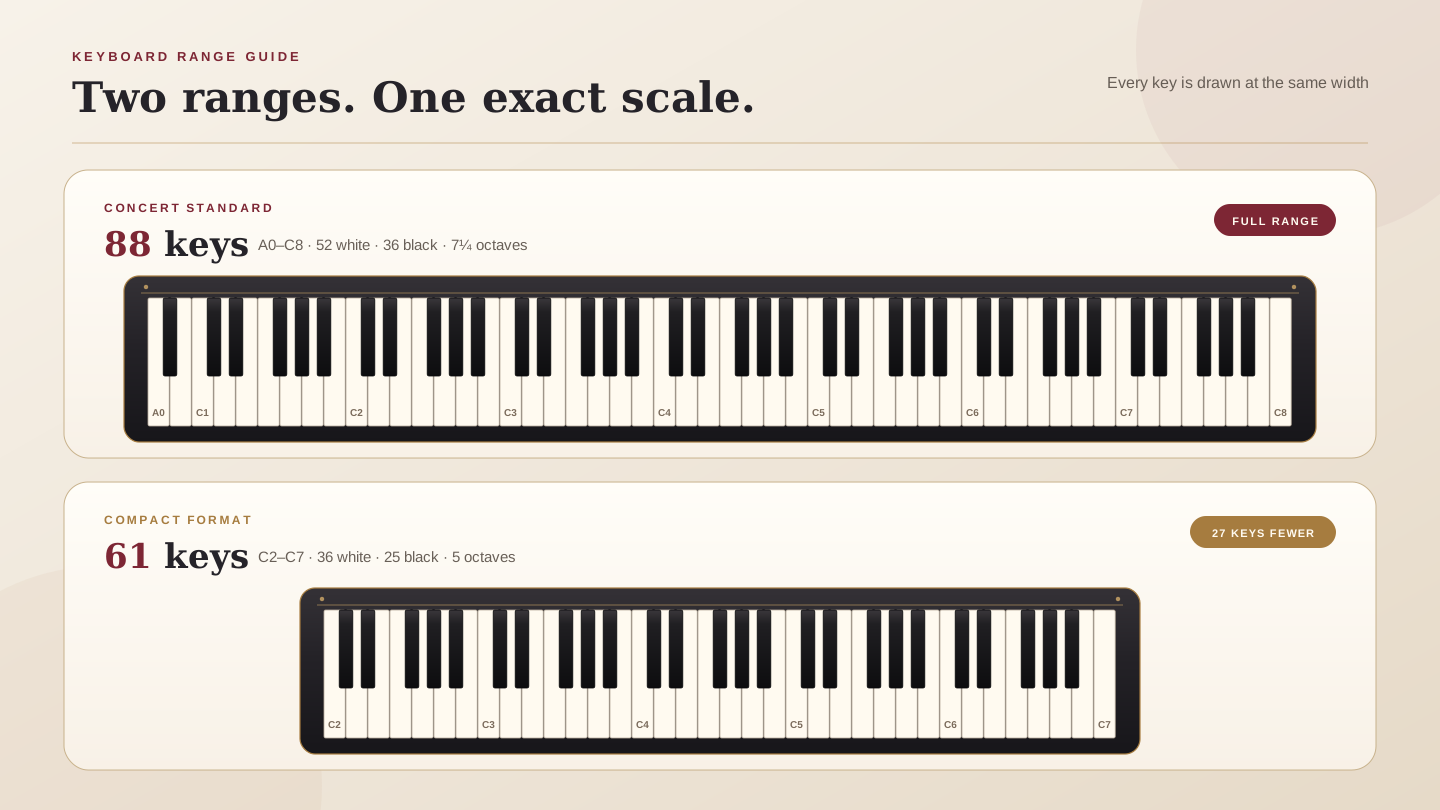
Do you want the full 88-key range or a smaller format that removes space and portability friction?
Key action
How convincingly do the keys resist and respond? This has the greatest daily effect on technique.
Sound
Does the piano voice decay naturally, respond from soft to loud, and remain pleasant through headphones?
Form
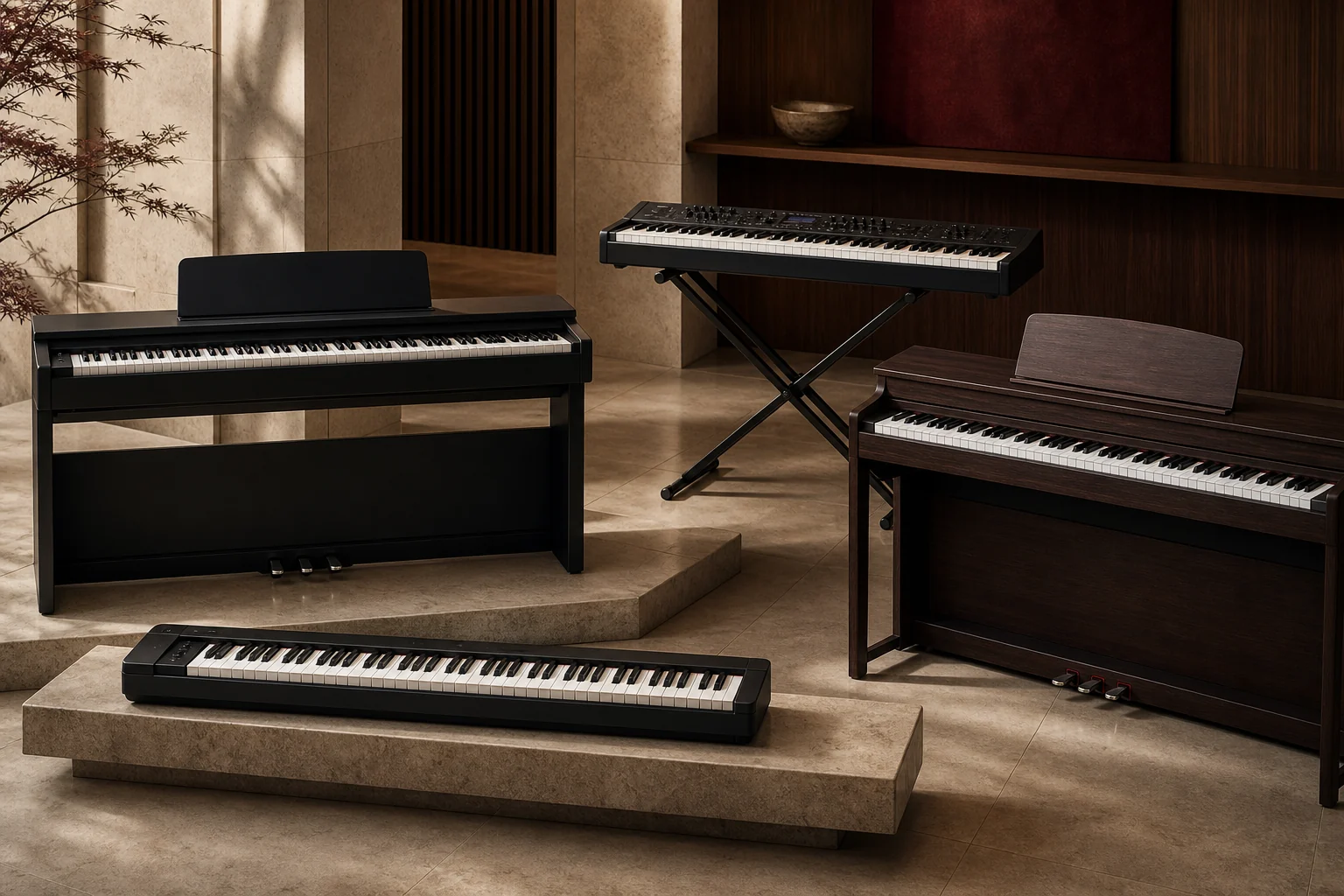
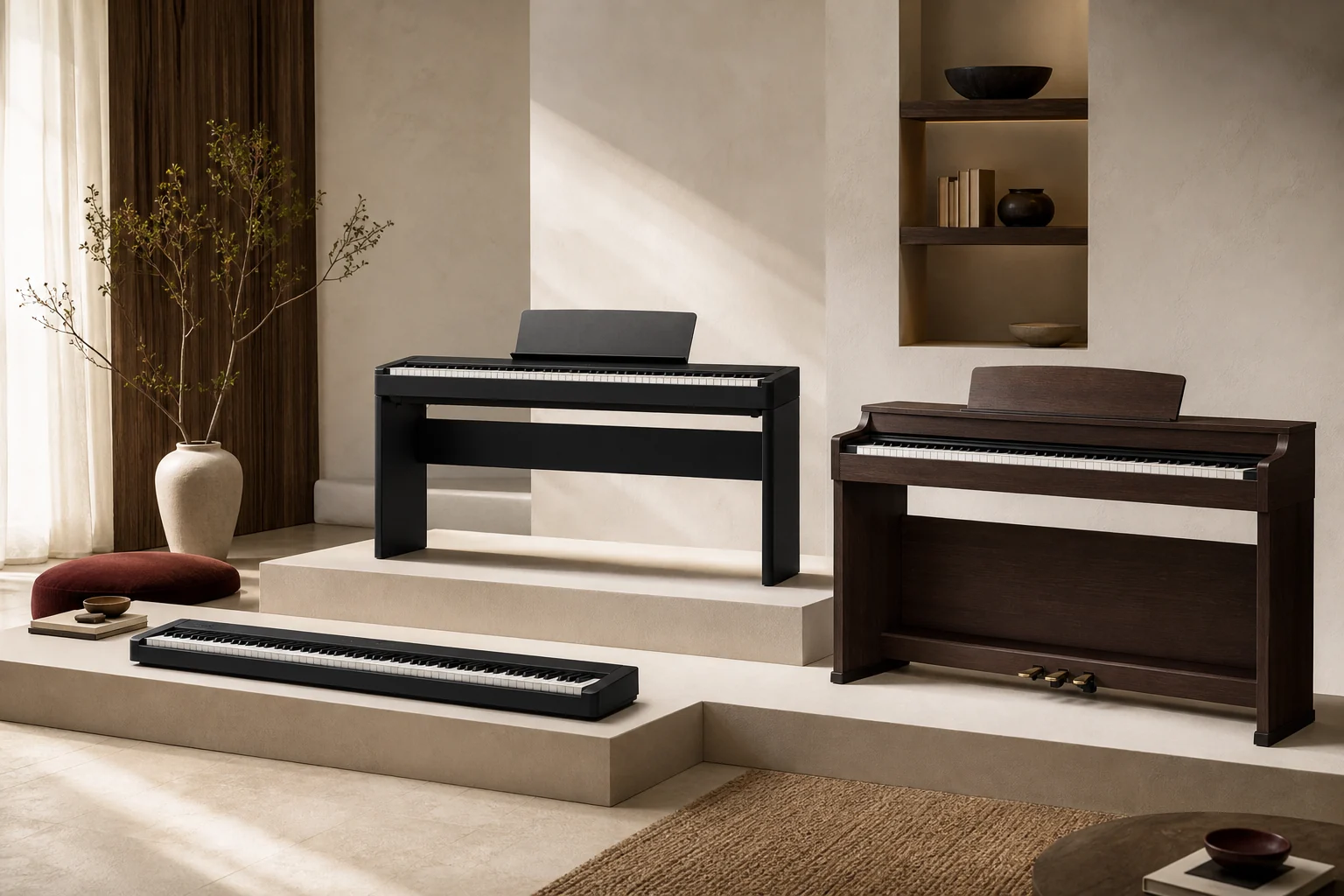
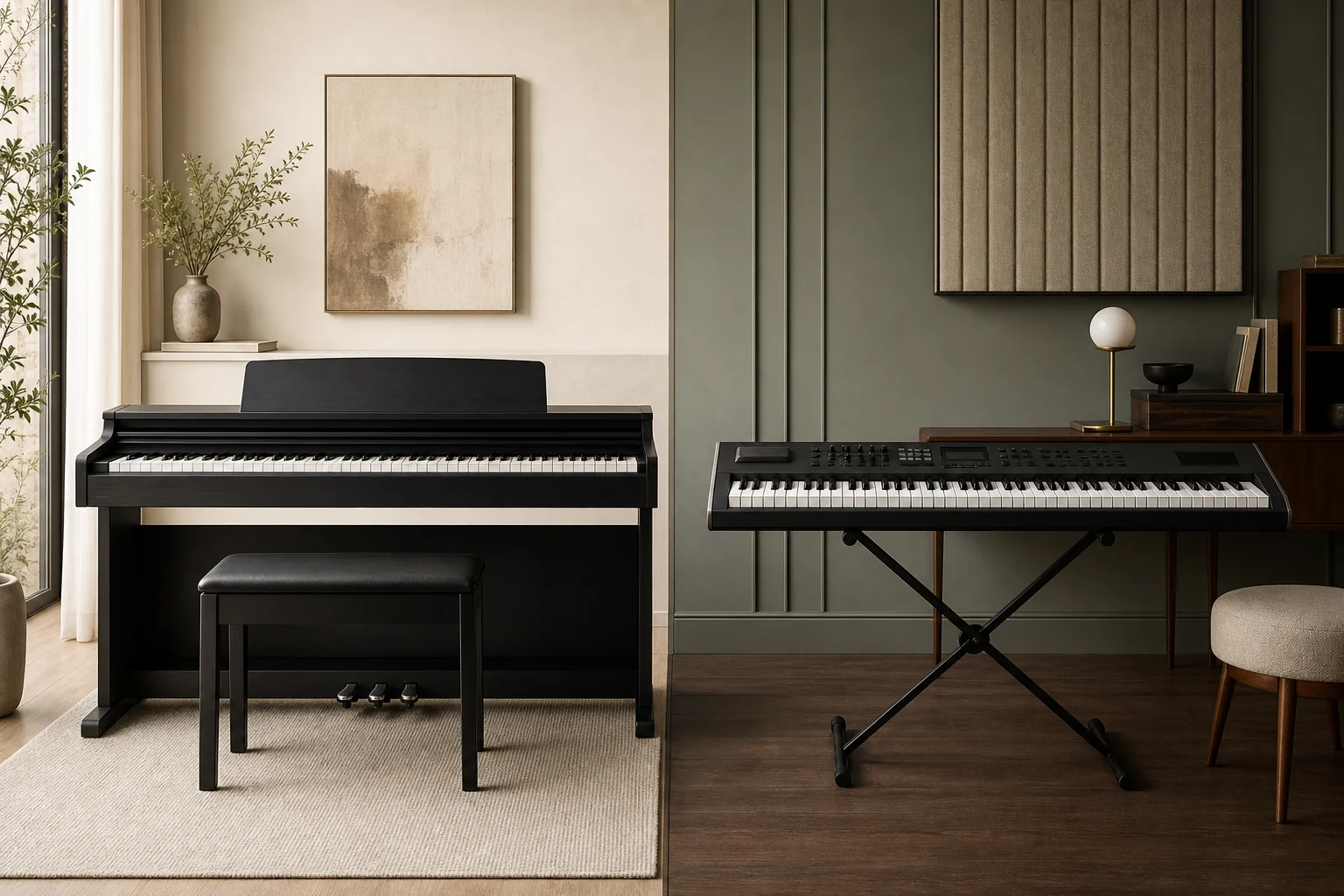
Will a portable slab stay set up on a solid stand, or will a furniture console make practice more inviting?
Decision 01
How many keys do you really need?
A full piano has 88 keys. A compact 61-key instrument covers much early material and is a completely valid place to begin when space, travel, or uncertain commitment is the binding constraint.
The cleanest long-term choice is still 88: it removes a future range upgrade and is more commonly paired with hammer action. The balanced rule is simple: 61 is enough to start; 88 is better when you want to buy once.
See the exact 88 vs 61 comparisonDecision 02
Why key action decides so much
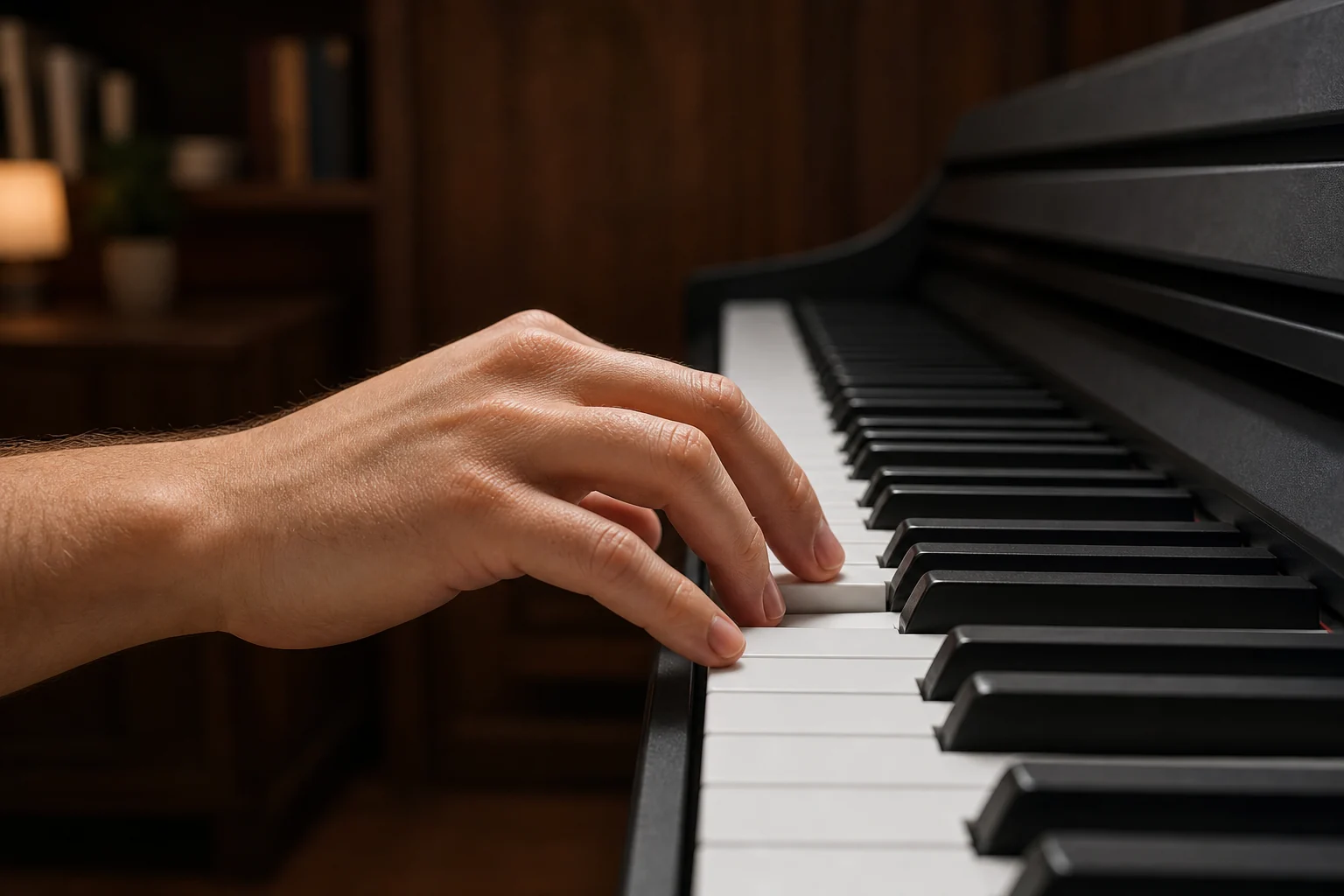
An acoustic key moves a hammer. The resistance is what lets a pianist shape volume, tone, and timing—and what develops finger strength. A fully weighted digital action recreates that physical work so the skill transfers more comfortably to an acoustic piano.
Graded action adds heavier resistance in the bass and lighter resistance in the treble. Semi-weighted action is a useful hybrid for piano plus synth work. Unweighted action is fast and portable, but it does not train the same control.
Compare all three action typesDecision 03
Sound engine, polyphony, and speakers
Digital pianos use sampling, modeling, or a blend of both. The technology label matters less than what you hear: play one note, hold it, and listen for a gradual, believable fade. Then play softly and firmly. The sound should change smoothly without becoming harsh.
Polyphony is the number of voices that can ring at once. It becomes audible when sustained notes disappear under the pedal or layered sounds. For a beginner, practical listening beats chasing the largest number.
Test twice
Listen through the built-in speakers at the volume your home allows, then repeat with the headphones you expect to use. A convincing instrument should remain enjoyable in both situations.
Decision 04
Slab or console—and where it will live
Flexible by design
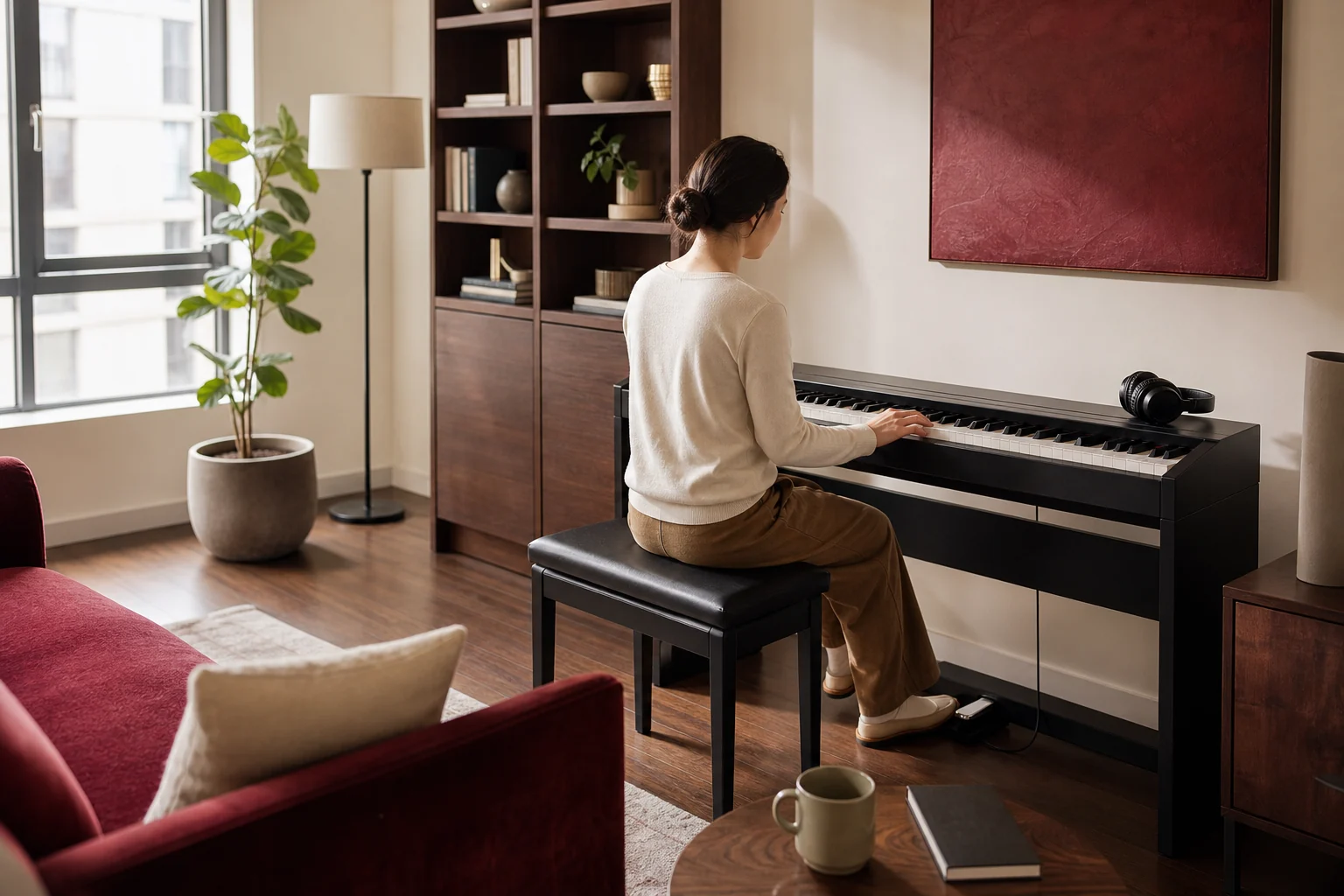
The instrument sits on a separate stand, moves more easily, and can adapt to a changing room. Pair it with a stable stand, correct bench height, and a pedal that does not slide.
Ready by default
A cabinet and integrated pedal unit create a permanent music corner. The instrument becomes part of the room and removes setup from the practice routine.
Measure the exact wall or corner before buying. Include the bench, pedal depth, access to power, headphone cable, and enough room for relaxed elbows.
Condition & value
Buying new vs used
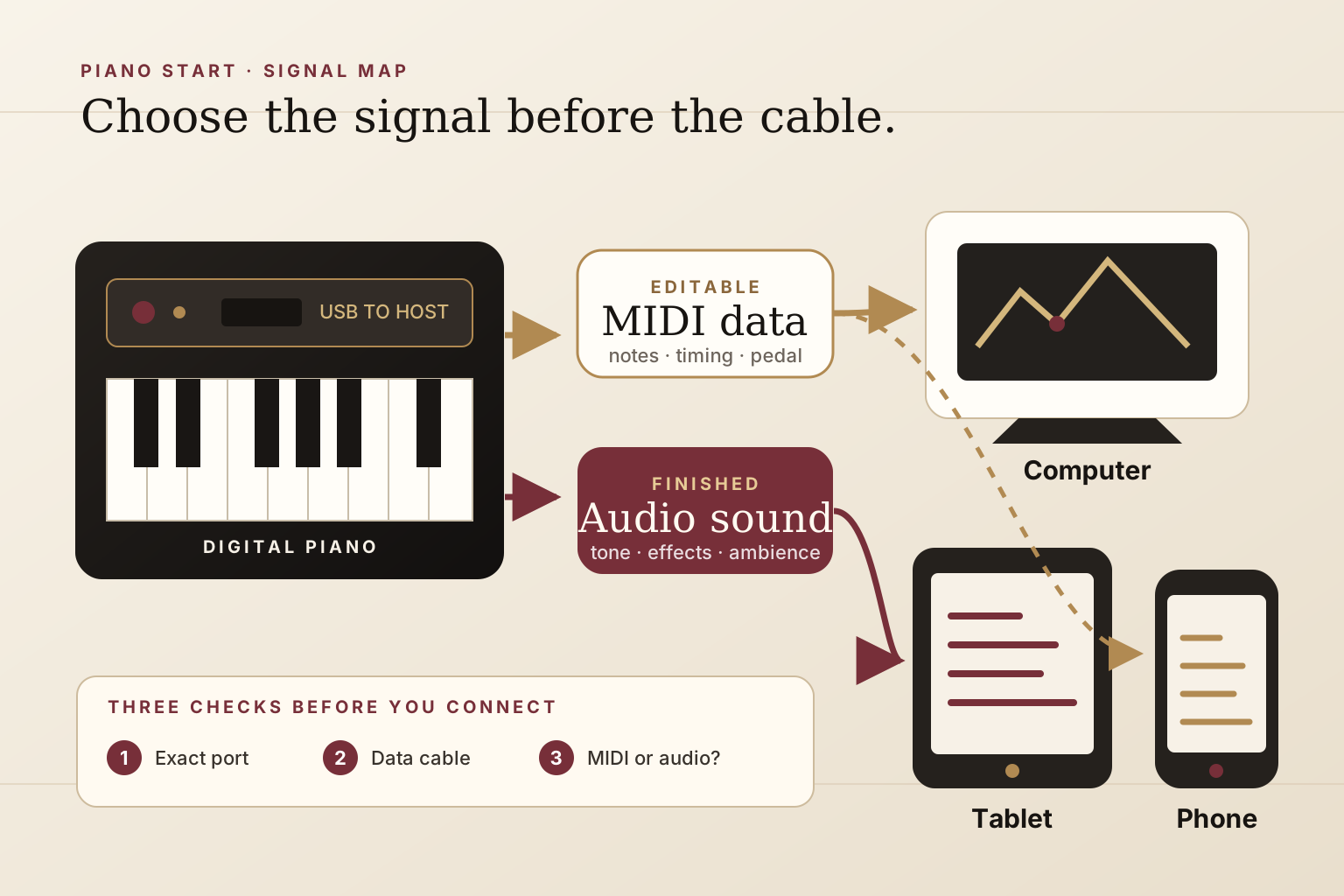
Digital pianos have no strings to tune, which makes a carefully tested used instrument attractive. Press every key quietly and firmly. Listen for dead, loud, or uneven notes. Test the speaker, headphone, power, USB/MIDI, and pedal connections. Confirm that the correct adapter and pedal are included.
New instruments bring a warranty, predictable condition, and simpler returns. If you cannot test a used piano in person, the balance shifts toward buying new from a seller with a clear return policy.
What to avoid
The beginner mistakes that cost the most
Five quiet practice killers
- Buying by the number of instrument voices instead of the quality of the action.
- Judging sound only at loud showroom volume.
- Choosing lesson lights over a repeatable practice routine.
- Playing from a dining chair at the wrong height.
- Waiting months for a perfect model instead of starting on a solid, suitable instrument.
In-store sequence
How to test a digital piano before you buy
- 01Make one note whisper.
Press a middle key as slowly and softly as you can. The instrument should respond before you have to strike it.
- 02Open the same note up.
Play firmly. The tone should grow without obvious distortion or an abrupt jump in volume.
- 03Listen to the fade.
Hold a note, then sustain a wide chord. Listen for a natural decay and notes that do not disappear too early.
- 04Repeat with headphones.
Check for hiss, delay, thin sound, and whether the headphone position remains comfortable.
- 05Trust the final signal.
Close your eyes and ask: “Do I want to keep touching this instrument?” The answer predicts practice better than a feature list.
Quick reference
Action types for a first piano
| Action | How it feels | Transfer to acoustic piano | Beginner fit |
|---|---|---|---|
| Fully weighted hammer | Real resistance with dynamic control | Direct | Best default for piano goals |
| Graded hammer | Heavier bass, lighter treble | Direct and more refined | Excellent when the budget allows |
| Semi-weighted | Light springs with added push-back | Partial | Useful hybrid compromise |
| Unweighted | Fast spring return, little resistance | Limited | Choose for portability or synth goals |
Primary references
Technical details worth verifying
Primary and manufacturer documentation is linked for the technical claims used in this guide. Product support, accessories, and regional specifications can change.
Clear answers
Frequently asked questions
01Is 61 keys enough to learn piano?
Yes for a meaningful start and much early repertoire. An 88-key instrument avoids a later range ceiling and is more often paired with hammer action, so it remains the stronger long-term default when practical.
02Do beginners really need weighted keys?
For piano-specific technique, weighted keys are the strongest recommendation because resistance develops control that transfers to acoustic instruments. A lighter action is valid when portability, synth work, or early exploration leads.
03What is the difference between a keyboard and a digital piano?
A digital piano prioritizes acoustic-style touch, range, tone, and pedals. A keyboard prioritizes portability, varied sounds, rhythms, and broader musical workflows.
04Can you properly learn piano on a digital piano?
Yes. An 88-key touch-sensitive instrument with convincing hammer action and a dependable pedal can support technique that transfers well to an acoustic piano.
05Do digital pianos need tuning?
No. Their pitch is generated electronically. They still need ordinary care, stable power, and occasional cleaning, but not acoustic tuning.
06What accessories does a beginner need from day one?
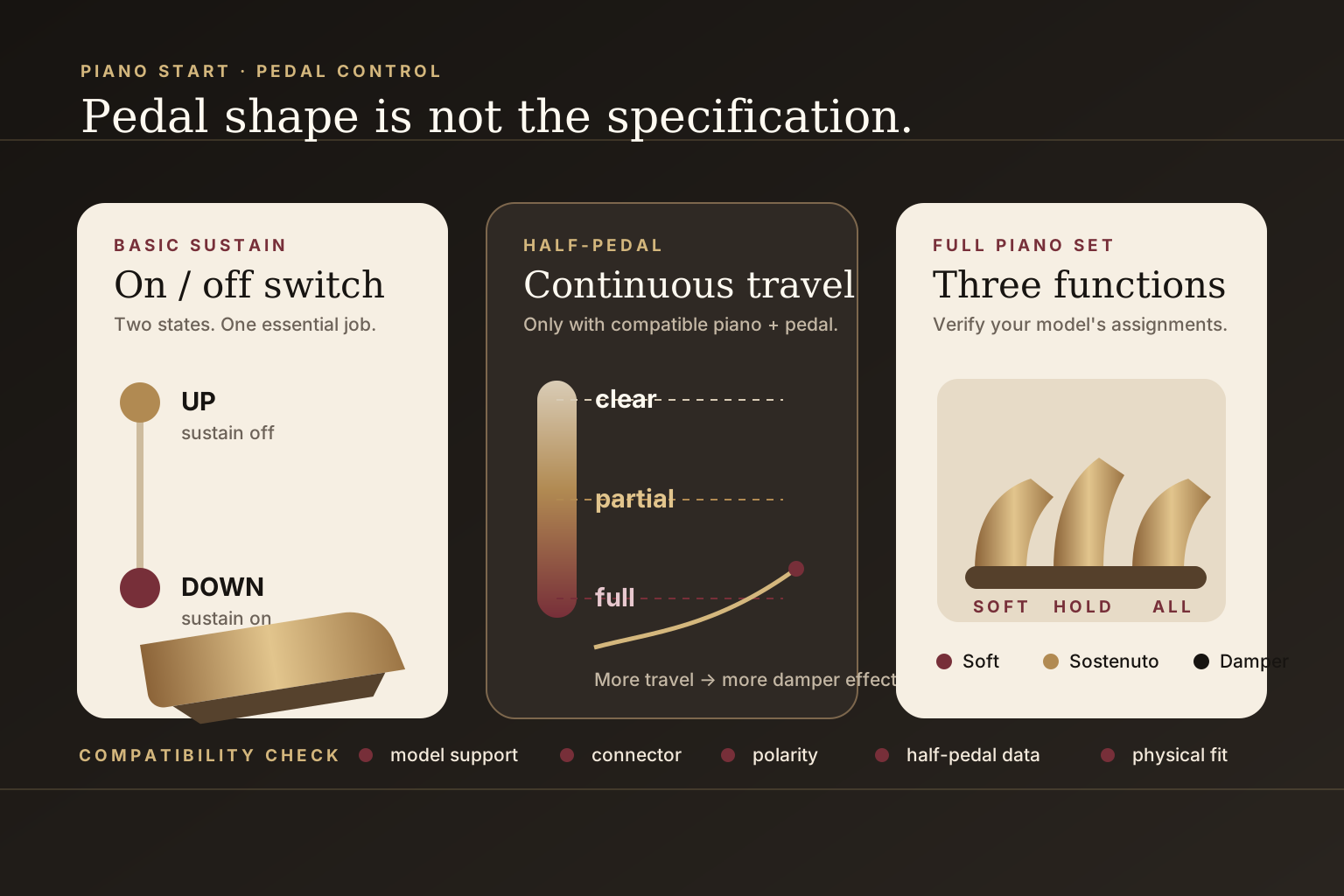
A stable stand or cabinet, an adjustable or correctly sized bench, a dependable sustain pedal, and comfortable headphones. Other accessories can wait.