Orientation
The short answer
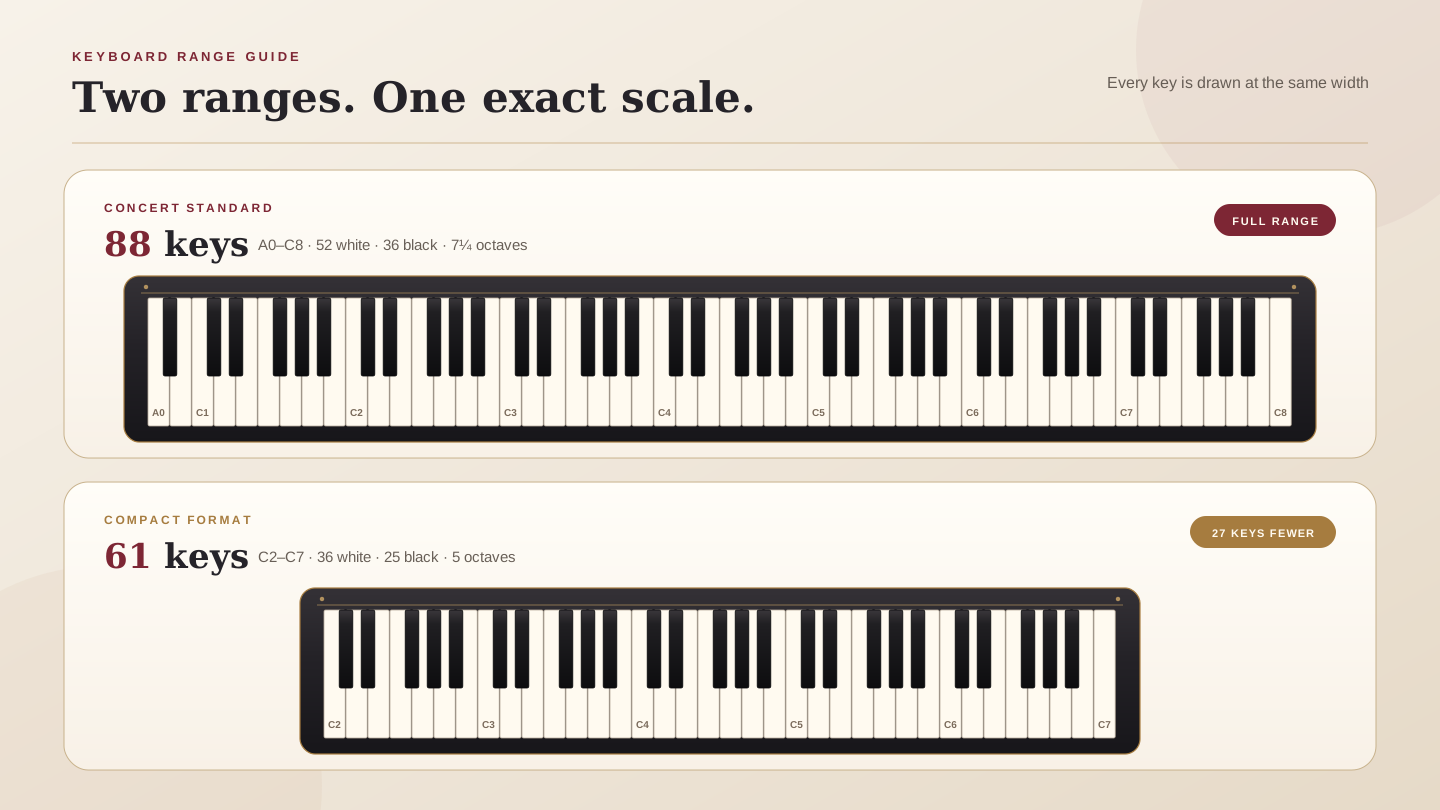
An 88-key instrument matches the full range of an acoustic piano and removes any future repertoire ceiling. A 61-key instrument covers five octaves—enough for a large share of early method work, pop songs, lead sheets, and chord-based playing—while taking much less room.
Full range
What 88 keys actually gives you
A standard piano runs from the lowest A to the highest C across just over seven octaves. You will not use the extremes in your first lessons, but the full range means every piano score can remain where it was written. Bass voicings, wide accompaniments, transcriptions, and advanced classical repertoire never collide with the physical edge of the instrument.
Manufacturers also tend to pair 88 keys with weighted or hammer action. That correlation is practical, but it is not guaranteed—always check the action specification separately.
Compact range
What 61 keys gives you—and what it does not
Five octaves covers most early lesson material and a great deal of pop, chord, and melody playing. The limit arrives when music asks for notes outside that span: then you must transpose, omit, rearrange, or move to a larger instrument.
The advantage is tangible every day. A 61-key board is shorter, usually lighter, easier to carry between homes or lessons, and more likely to fit on a narrow desk or fold-away stand.
Separate the specifications
Key action matters more than the number on the box
If you must choose
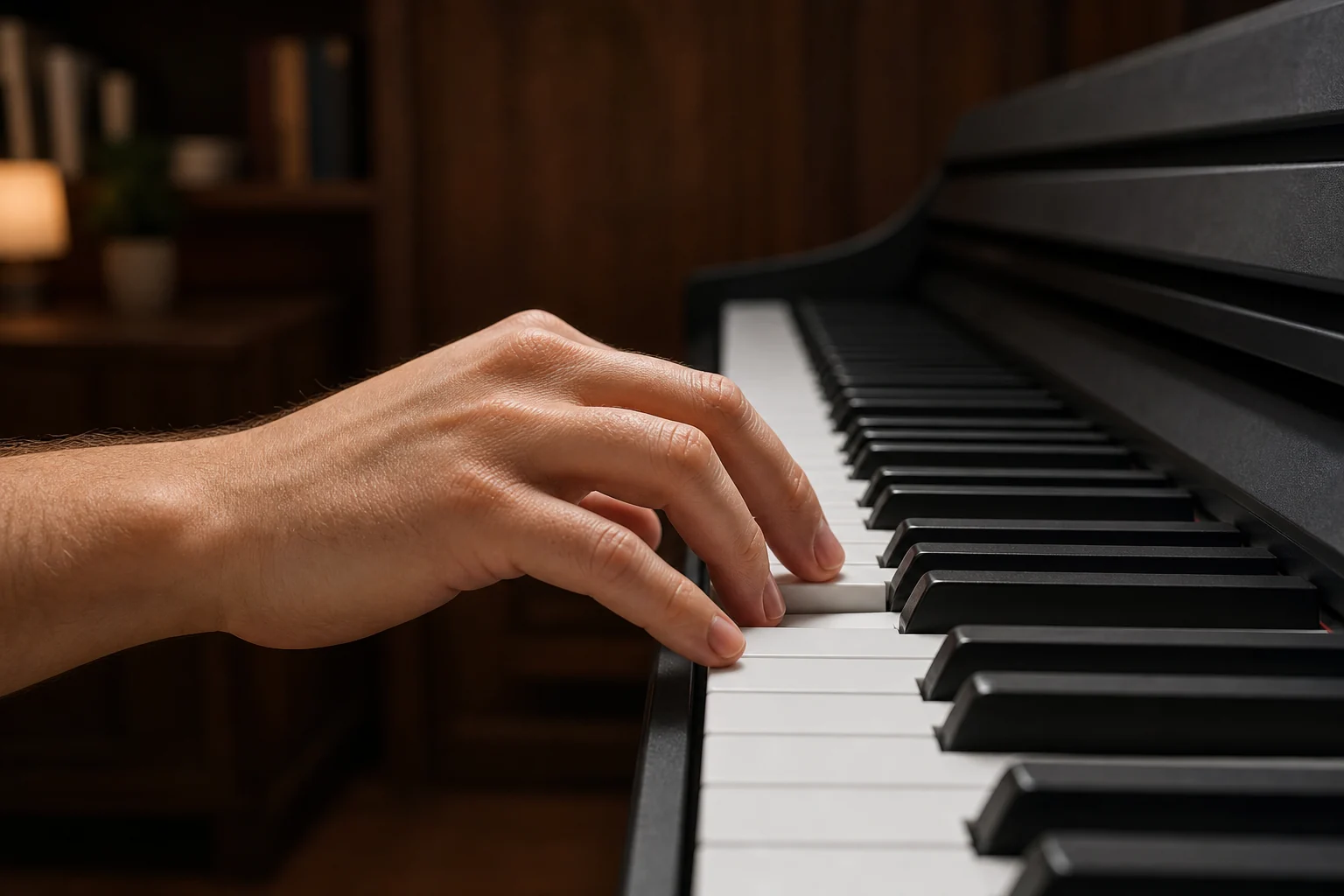
For daily technique, realistic resistance can matter more than outer notes you will not reach yet. A weighted 61- or 76-key instrument may be a better teacher than an unweighted 88-key board.
Key count tells you how far the instrument reaches. Action tells you how every one of those notes feels. The best first piano brings both together: full range and convincing hammer resistance.
The room is part of the instrument
Size and where you will actually practice
Remove space friction
Choose the smaller format when the instrument must travel, share a desk, move between homes, or disappear after practice. Easy access is more valuable than an ideal specification that never gets set up.
Give it a permanent place
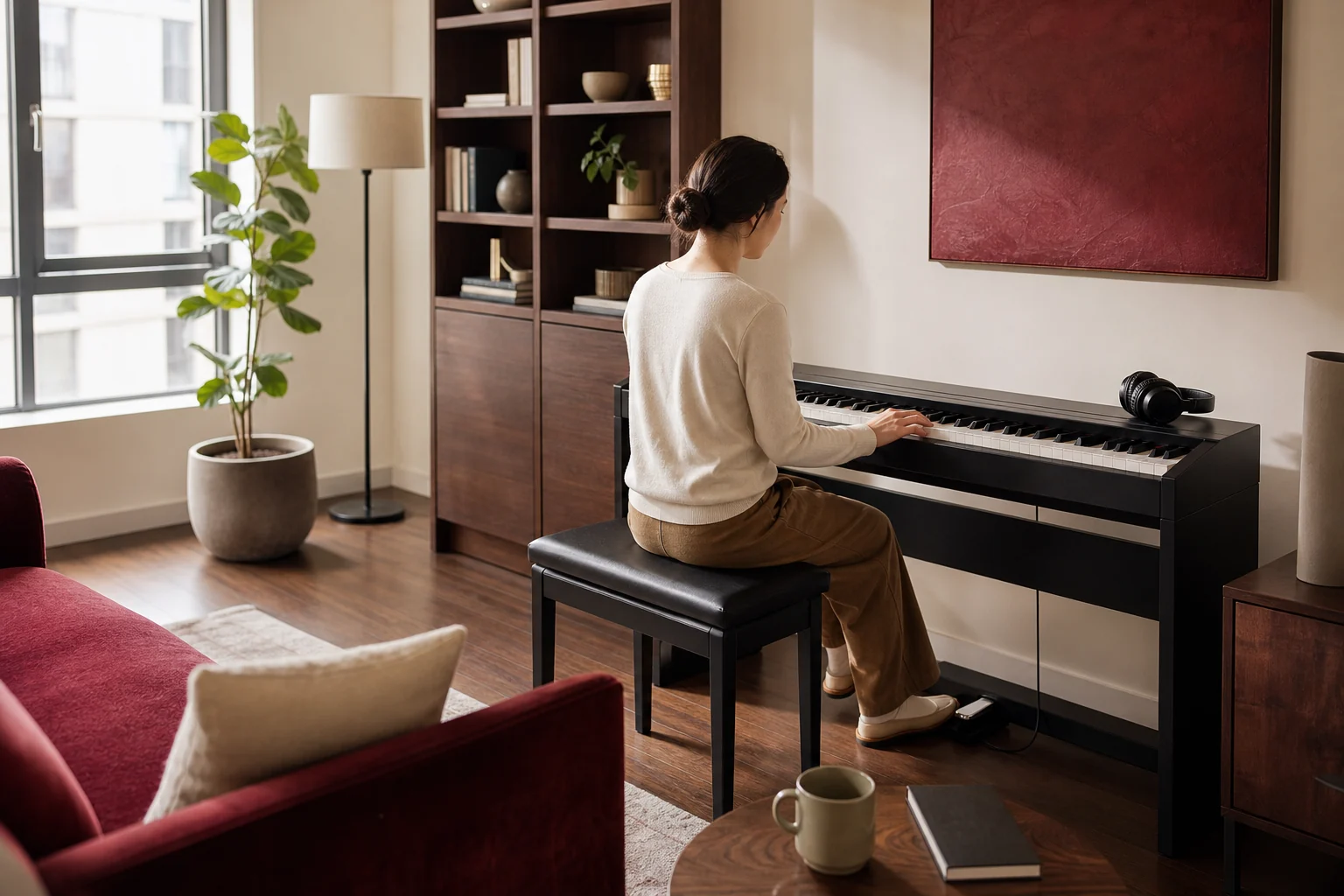
Choose full range when lessons are already part of the plan, classical repertoire matters, and the room can keep the piano ready on a stable stand or cabinet.
Side by side
88 keys vs 61 keys at a glance
| Factor | 88 keys | 61 keys |
|---|---|---|
| Range | Full 7+ octaves, matching an acoustic piano | Five octaves, covering much early material |
| Typical action | Often weighted or hammer-action | Often unweighted or semi-weighted |
| Repertoire ceiling | None for standard piano literature | Appears when music reaches outer registers |
| Footprint | Needs a dedicated full-width position | Roughly two-thirds the length and easy to move |
| Best fit | Committed lessons, classical goals, stable space | Undecided beginners, tight rooms, travel, casual pop |
Decision guide
When each size is the smarter choice
- Choose 61 keysIf commitment is still uncertain, the instrument must move, space is genuinely tight, or the goal is casual and pop-focused playing.
- Choose 88 keysIf lessons are planned beyond the first year, classical repertoire matters, a stable place is available, or buying once is preferable to upgrading later.
- Consider 76 keysIf you need more range than 61 but cannot accommodate the full width of 88. Check the action carefully; formats vary.
Editorial note
Verify the instrument in front of you
Prices, bundles, actions, and included accessories vary by model and market. Use this guide as a decision framework, then confirm the current specification and return policy with the manufacturer or seller.
Clear answers
Frequently asked questions
01Can you actually learn piano on 61 keys?
Yes. Five octaves covers most early method work and a great deal of pop and chord-based playing. The range becomes limiting later when music reaches the outer registers.
02Do beginners need 88 keys right away?
No, but 88 keys removes a future range ceiling and is more often paired with weighted action. It is the cleaner long-term choice when space and budget allow.
03Is a 61-key keyboard the same as a piano?
It can play the same notes within its range, but compact models often use lighter action and do not reproduce the full acoustic-piano span or cabinet-and-pedal setup.
04Will I outgrow a 61-key keyboard?
Possibly. Classical pieces, wide arrangements, and full bass-and-treble writing eventually require more range. Casual and pop-focused players may remain comfortable on 61 keys for much longer.
05Does key count matter more than weighted keys?
For daily technique, weighted resistance often matters first. For repertoire, range matters when the music reaches the edges. Ideally secure both; if you cannot, choose according to the goal you have now.
06What is a good middle ground?
A 76-key instrument or a weighted/semi-weighted compact model can reduce the footprint while preserving more range or better resistance. Treat action and count as separate checks.