Orientation
The short answer
Weighted keys use a hammer-style mechanism to recreate acoustic-piano resistance. Semi-weighted keys combine springs with added resistance. Unweighted keys return quickly with little physical load.
Feel & transfer
Three actions, three different jobs
Built for piano control
Hammer-style resistance supports finger strength, quiet-to-loud control, and the most direct transfer to acoustic piano.
A hybrid middle ground
Added resistance gives more feedback than synth action while preserving speed for players moving between piano and electronic parts.
Fast, light, and electronic
Spring action suits synths, production, organ-style playing, and low-friction musical exploration—not acoustic-piano simulation.
The piano reference
Weighted keys: closest to acoustic touch
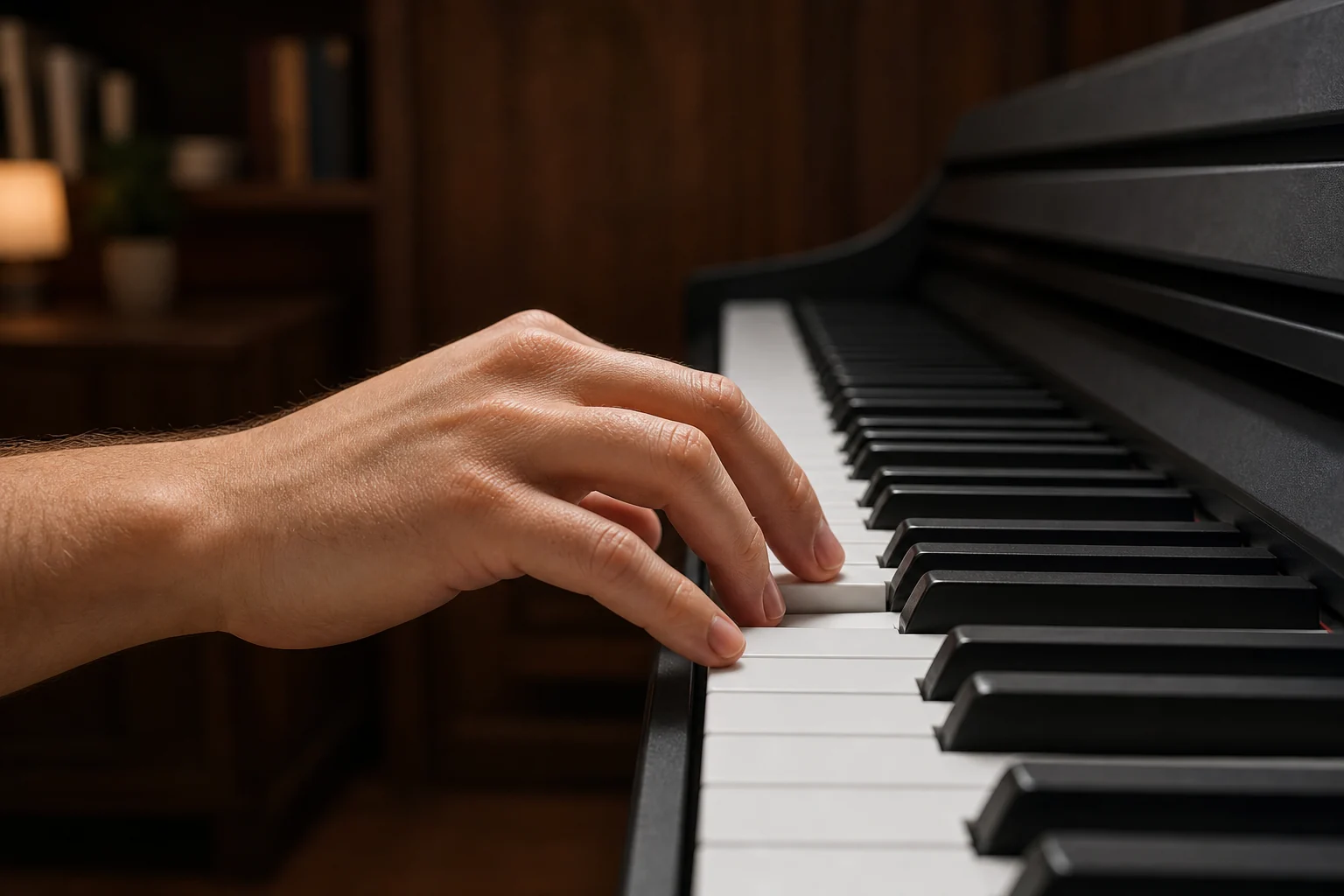
An acoustic piano key sets a hammer in motion. That mass and leverage give the fingers resistance to shape: a slow, controlled press can whisper; a faster, firmer motion can project. A digital hammer action recreates the physical part of that relationship while sensors translate movement into sound.
Graded hammer actions use heavier resistance in the bass and lighter resistance toward the treble, echoing the changing hammer mass inside an acoustic piano. It is a valuable refinement, although a stable, consistent weighted action matters more than a premium label.
Do not confuse two specifications
Action describes the physical mechanism and resistance. Touch sensitivity describes whether playing velocity changes the sound level or tone. A beginner piano should ideally provide both.
Where lighter actions belong
Semi-weighted and unweighted keys
Semi-weighted: useful when your playing is hybrid
Semi-weighted actions add resistance to a spring mechanism but usually do not reproduce the leverage and graded feel of a hammer action. They can be a sensible choice for a player moving between piano-style chords, synth leads, organ parts, and production.
Unweighted: designed for speed and portability
Light spring action makes quick electronic parts and compact instruments practical. A very young learner may also find it inviting. The trade-off is that the fingers do not practice controlling real resistance, so a later acoustic piano can feel unexpectedly heavy.
Priority check
Action often matters before key count
The action affects every note you play. The missing outer octaves matter only when the music reaches them.
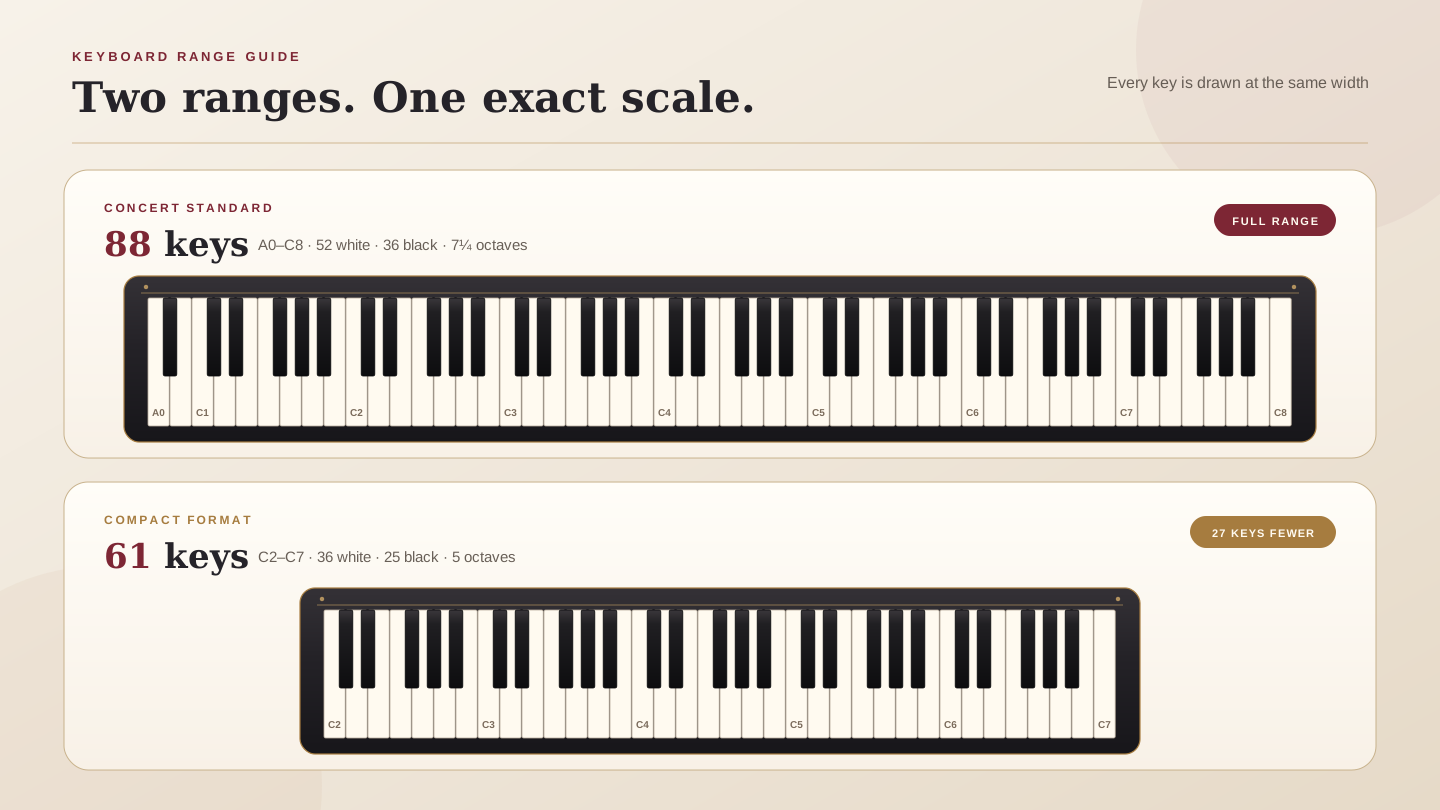
If the choice is truly between a smaller keyboard with convincing resistance and a full-width board with no resistance, the weighted smaller instrument may build better daily control. In practice, fully weighted action is most common on 88-key models, so the ideal is still to secure both.
Side by side
Key actions at a glance
| Factor | Weighted | Semi-weighted | Unweighted |
|---|---|---|---|
| Feel | Hammer-style resistance; often graded | Springs with added resistance | Light spring return |
| Piano technique | Strongest transfer | Partial transfer | Limited resistance training |
| Best for | Traditional piano study | Piano plus synth/production | Synths, organ parts, portability, exploration |
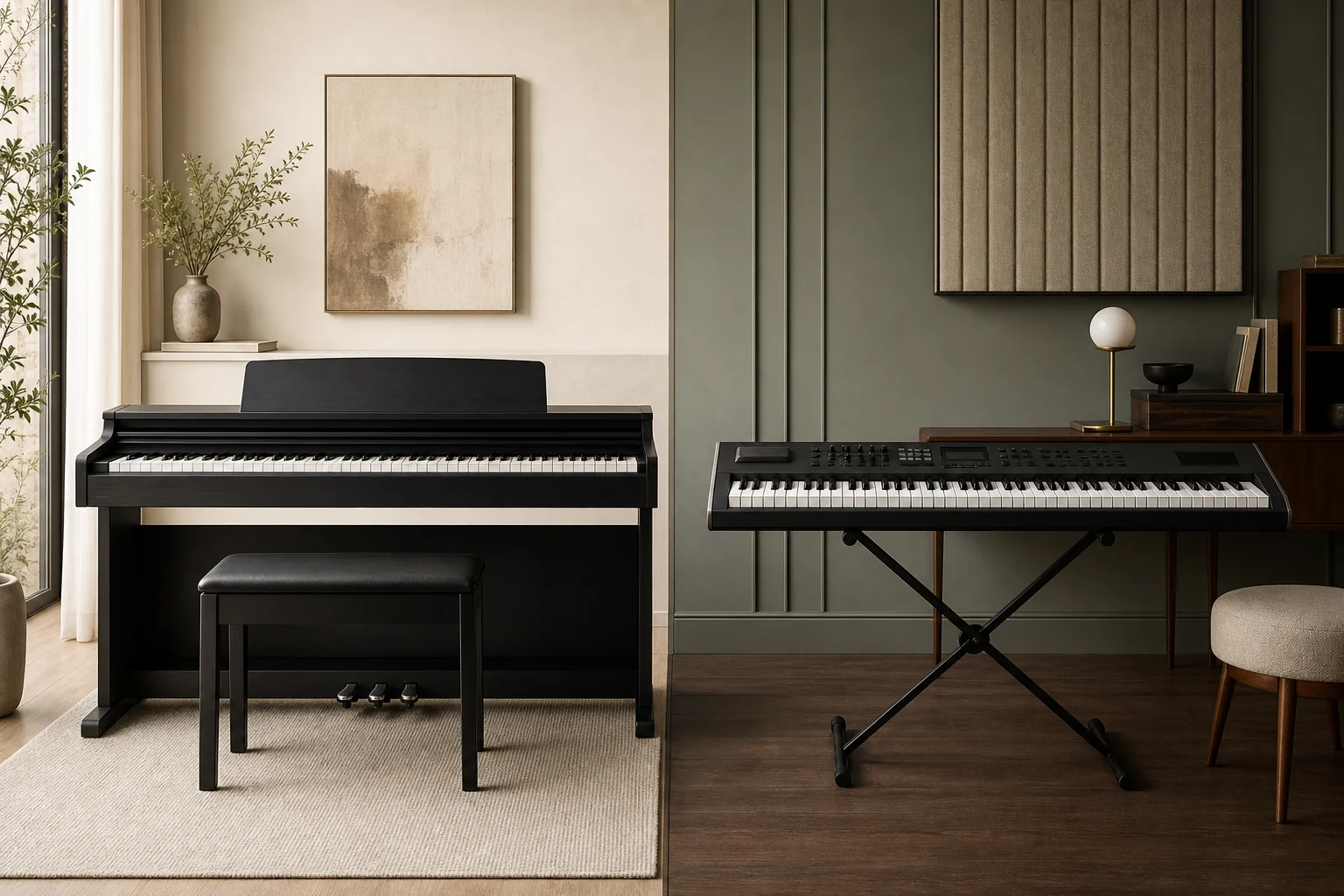
| Common format | 88-key digital pianos | Some stage and controller keyboards | Portable keyboards and synthesizers |
Decision guide
Which type should you choose?
- Choose weightedFor lessons, classical or contemporary piano repertoire, graded exams, and future acoustic-piano playing.
- Choose semi-weightedWhen the same instrument must cover piano-like playing and faster synth, organ, or production work.
- Choose unweightedFor maximum portability, synth-focused work, or early exploration where low resistance is part of the goal.
Primary references
Technical details worth verifying
Primary and manufacturer documentation is linked for the technical claims used in this guide. Product support, accessories, and regional specifications can change.
Clear answers
Frequently asked questions
01Can a beginner learn on unweighted keys?
Yes, but the instrument will not build the same resistance control as a hammer action. If piano-specific technique becomes the goal, changing to weighted keys sooner reduces the amount of physical adjustment later.
02Is semi-weighted good enough for piano lessons?
It can support an early start and is more resistant than a light synth action. Fully weighted hammer action remains the closer match for lessons centered on acoustic-piano technique.
03Do all 88-key digital pianos have weighted keys?
No. Full key count and action type are separate specifications, even though manufacturers frequently pair 88 keys with hammer action. Check both.
04Why do weighted keys feel heavier in the bass?
Graded actions echo an acoustic piano, where the bass hammers and strings are larger. The resistance becomes lighter toward the treble.
05Will unweighted keys damage my technique?
They do not cause physical damage, but they can encourage a lighter touch that feels different on an acoustic piano. Think of the issue as limited transfer, not harm.