Orientation
The short answer
A digital piano is designed to substitute for an acoustic piano: full range, weighted action, focused piano tone, and meaningful pedal support. A keyboard is designed as a flexible, portable instrument with many sounds, rhythms, and arranging features.
Depth over breadth
Fewer core sounds, more attention to piano touch, decay, dynamics, and a seated playing position.
Breadth over depth
More voices and accompaniments in a lighter body that can move between rooms, lessons, and styles.
The essential distinction
Two different design goals
What “digital piano” really means
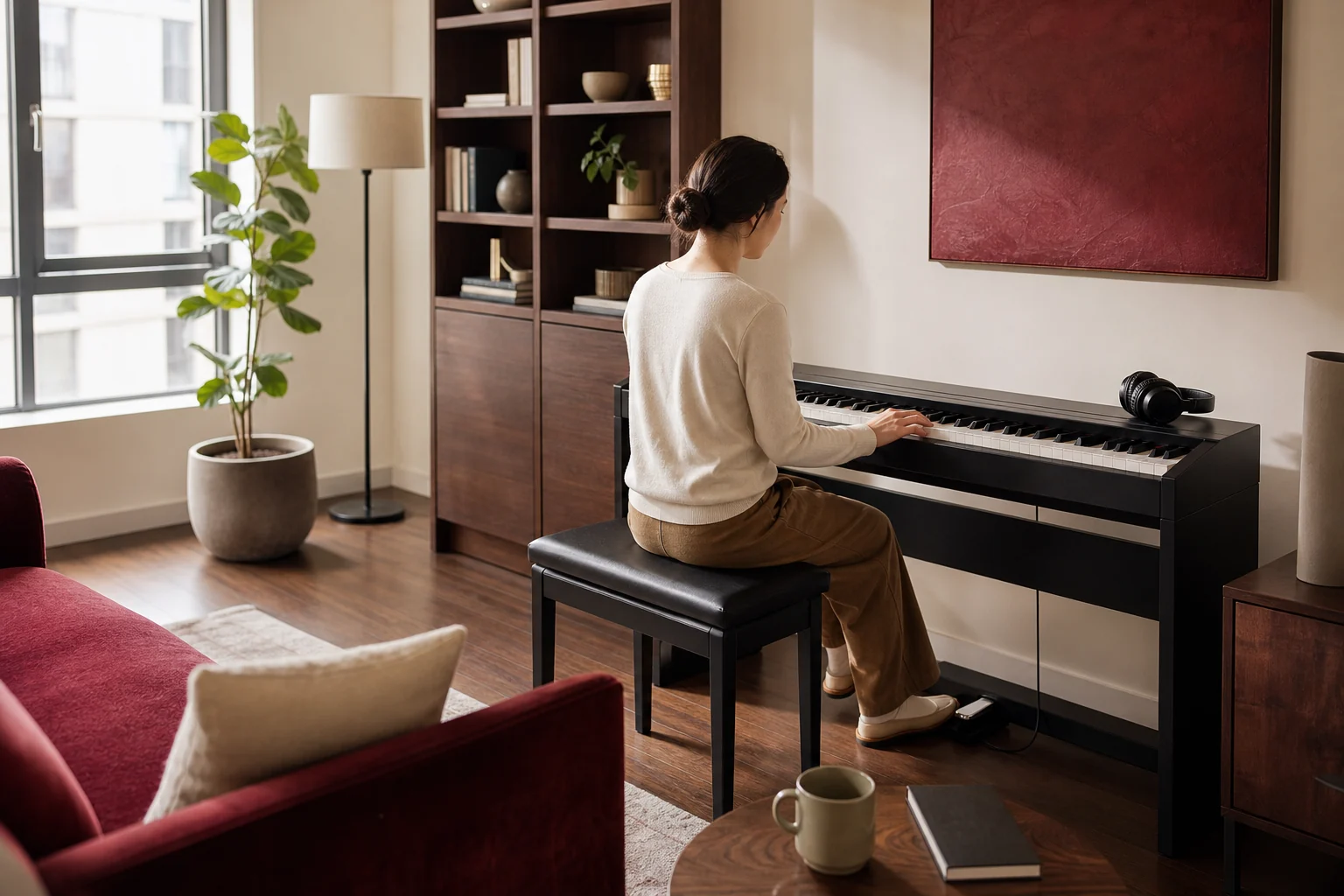
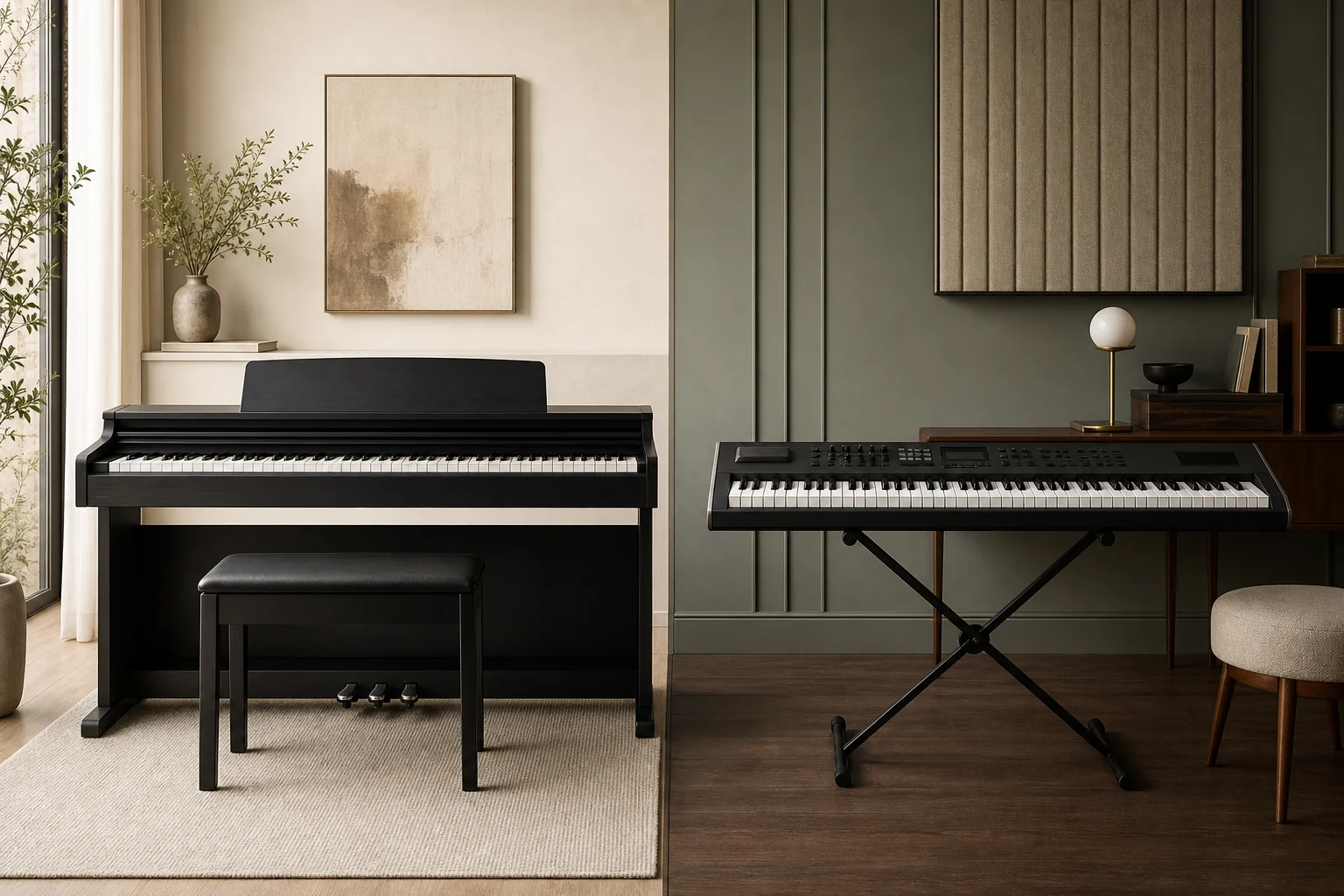
The category is organized around one job: reproducing the acoustic-piano experience. That usually means 88 keys, weighted or hammer action, touch response, convincing piano voices, and a body designed for seated practice. The focused design is the point—not a lack of features.
What “keyboard” really means
Portable and arranger keyboards spread their attention across more sounds and workflows: strings, brass, synths, drums, backing rhythms, auto-accompaniment, recording, and lesson modes. Lighter keys and smaller formats make that flexibility easier to carry.
What changes in practice
The five differences you will feel
Under the surface
Sound, pedals, and extra features
Why piano tone often sounds deeper
Both categories use recorded or modeled sound, but a digital piano can dedicate more memory, processing, and speaker design to a smaller set of piano voices. Listen for gradual note decay, a smooth transition from soft to loud, and sustained chords that do not lose their earliest notes.
Why pedal support matters
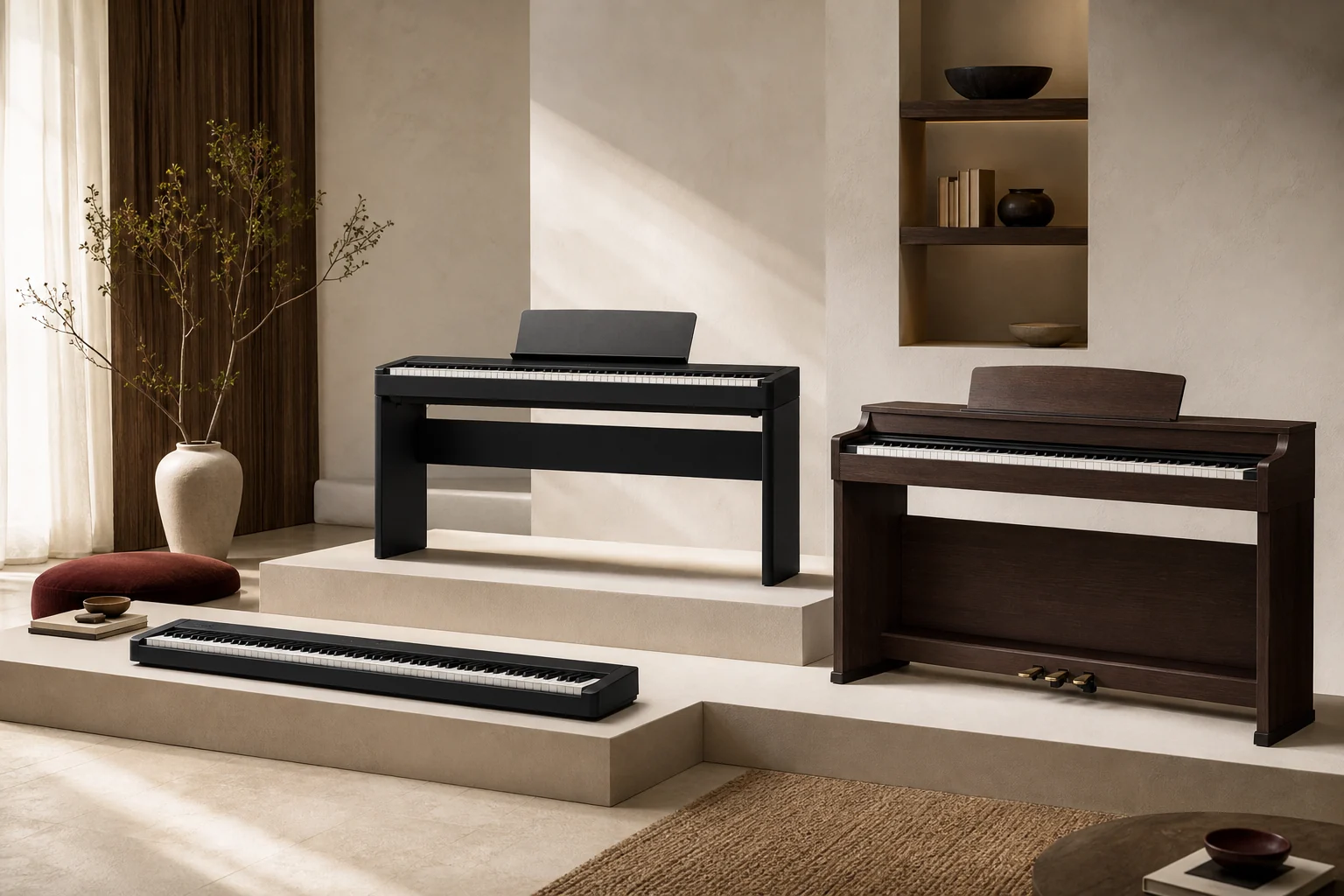
A beginner needs a reliable sustain pedal before the other two acoustic-piano pedals become essential. Cabinet-style digital pianos often integrate all three; a keyboard commonly starts with a single optional switch pedal.
Why more features are not automatically more value
Auto-accompaniment and varied sounds can be inspiring for songwriting or broad exploration. They do not replace realistic resistance when the learning goal is piano technique.
Side by side
Digital piano vs keyboard at a glance
| Factor | Digital piano | Keyboard |
|---|---|---|
| Design goal | Substitute for an acoustic piano | Flexible, multi-style music making |
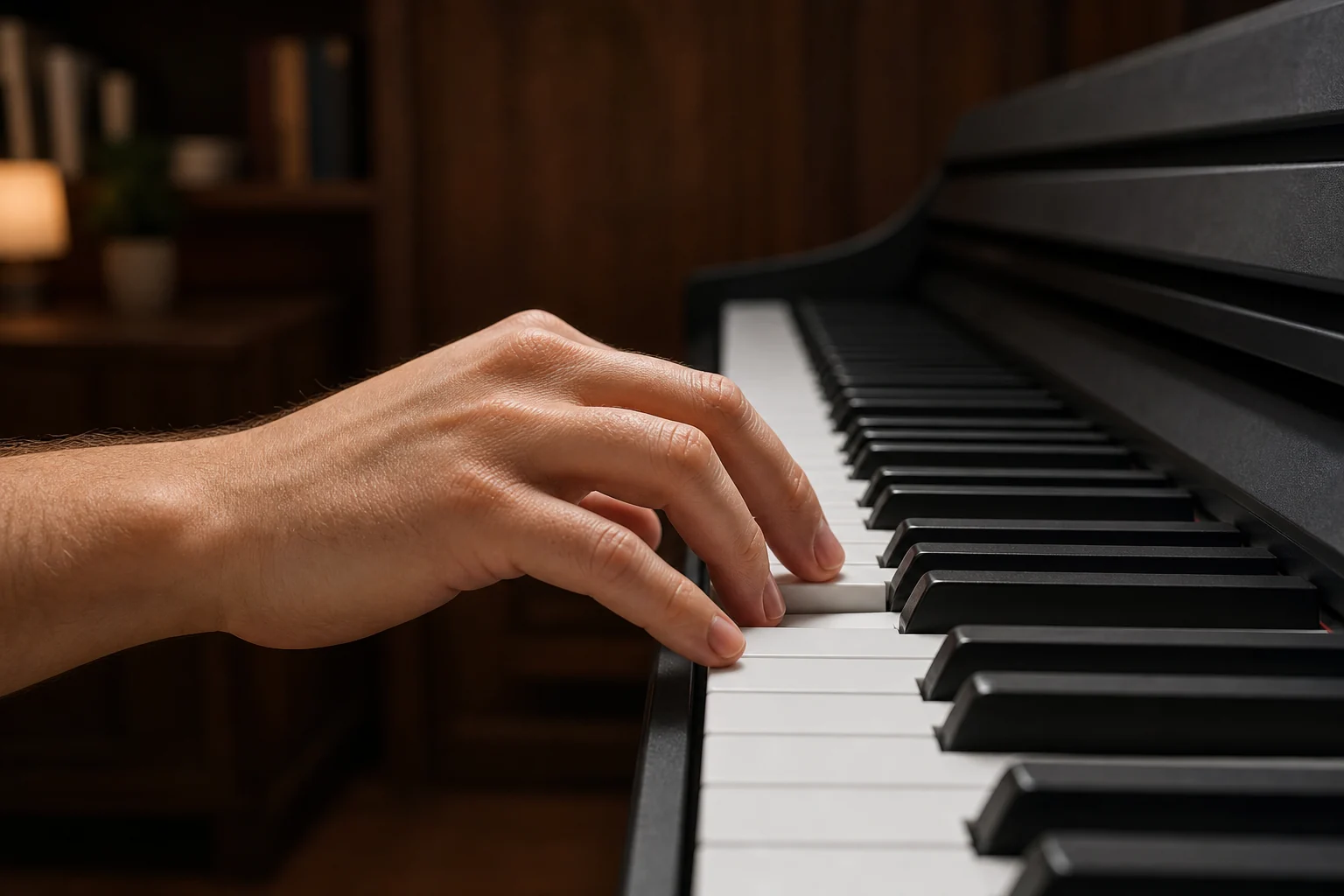
| Key action | Usually weighted or hammer-action | Often light, spring-based, or semi-weighted |
| Sound focus | Fewer voices with deeper piano treatment | Many voices and accompaniment styles |
| Pedals | Sustain support; sometimes an integrated triple unit | Usually one jack for an optional sustain pedal |
| Footprint | Full-width and often semi-permanent | Compact, light, and easy to carry |
| Best for | Piano lessons and acoustic-piano goals | Exploration, portability, production, and casual play |
Decision guide
Which one fits your actual goal?
You want to learn piano
Traditional lessons, classical or contemporary piano repertoire, expressive dynamics, and comfortable transfer to an acoustic instrument are the goal.
You want a flexible music tool
Portability, broader sound exploration, songwriting, accompaniment, or a low-friction first experiment matter more than acoustic-piano fidelity.
Starting on a keyboard is valid. Move to weighted action when piano-specific technique becomes the priority.
Primary references
Technical details worth verifying
Primary and manufacturer documentation is linked for the technical claims used in this guide. Product support, accessories, and regional specifications can change.
Clear answers
Frequently asked questions
01Can you learn piano on a regular keyboard?
Yes, especially at the beginning. A light action will not build the same finger control as weighted keys, so move toward a hammer-action digital piano if acoustic-piano technique becomes the clear goal.
02Is a digital piano always better than a keyboard?
No. It is better for piano-specific touch and tone. A keyboard is better when portability, varied sounds, accompaniment, production, or a low-commitment first step matter more.
03Do keyboards have weighted keys?
Some do, but it is not the default on compact entry models. Check the action specification independently from the number of keys.
04Why do digital pianos often sound more realistic?
They can devote more of their sampling, modeling, polyphony, amplification, and speaker design to piano voices rather than spreading resources across many instrument sounds.
05Do beginners need sostenuto and soft pedals?
Not immediately. A dependable sustain pedal covers most early repertoire. The other two pedals matter more as technique and repertoire advance.